


 Menu
Menu


 Realizacje
A social media revolution: Google starts indexing content from Facebook and Instagram
Realizacje
A social media revolution: Google starts indexing content from Facebook and Instagram


 5 min
5 min
A social media revolution: Google starts indexing content from Facebook and Instagram
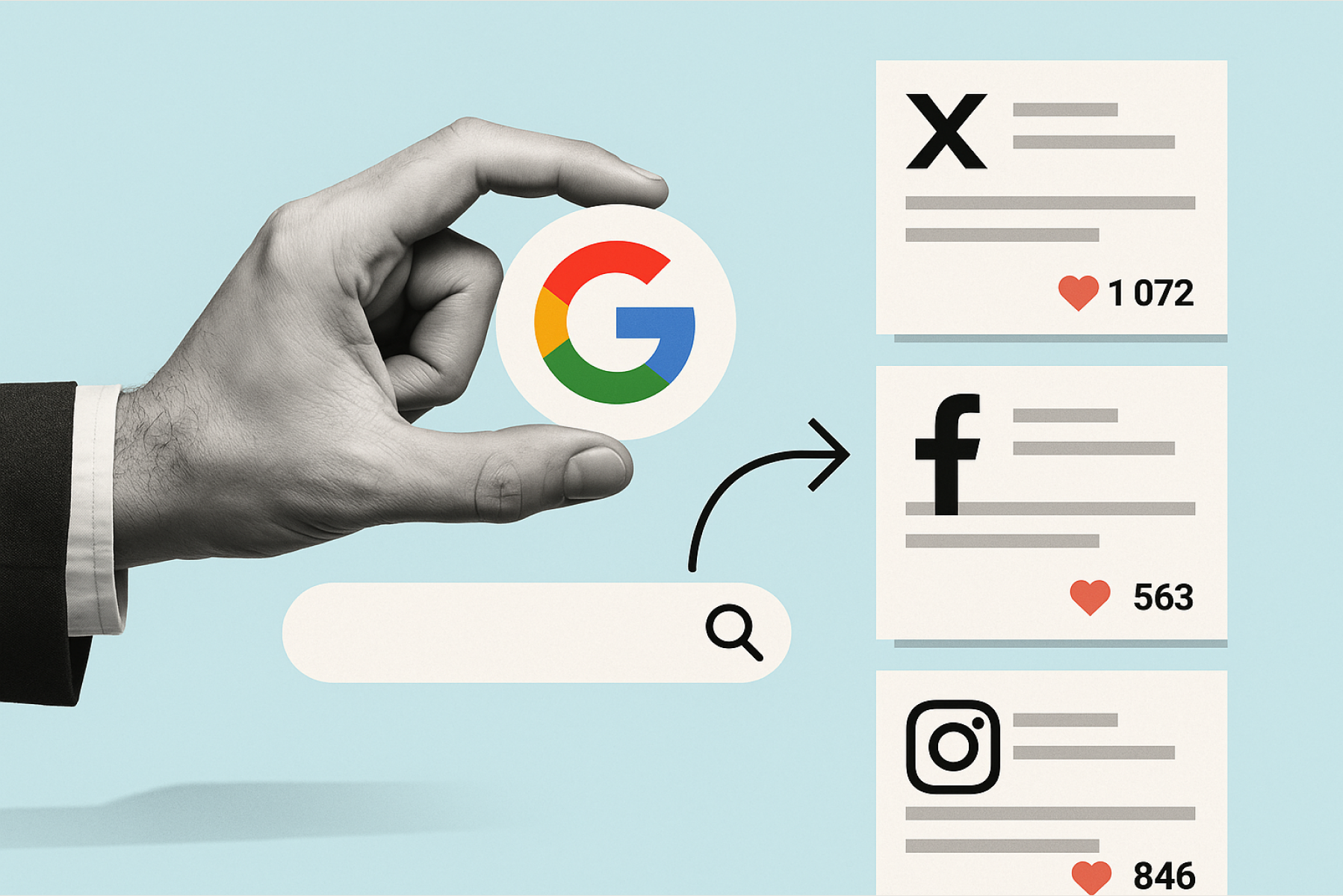
Since July 2025, your posts from Instagram and Facebook can show up in Google. It is an enormous shift, one that gives content made for social media a new role — it can drive traffic, build SEO and work for a brand’s visibility exactly the way a website does.
What changed?
On 10 July 2025 Google introduced a change that could significantly affect how brands approach their presence on social media. From that day, public posts from Instagram and Facebook began to be indexed in Google search results.
Until then, content on Meta’s platforms functioned largely as a closed ecosystem, available only inside the apps. That has now changed. Your photographs, captions, Reels, even comments and calls to action stand a chance of appearing in search alongside blog articles, company websites and e-commerce stores. It is an enormous shift, and it means one thing: it is time to treat social media as a fully fledged part of your SEO strategy.
Which posts will be visible in Google?
Only posts meeting specific conditions can be indexed by Google:
- published from an account in professional mode (business or creator),
- public, meaning visible to everyone rather than only to friends,
- published after 1 January 2020 (this applies to Instagram),
- posted by someone aged 18 or over.
Ephemeral content such as Stories is not covered by indexing. Whether comments and tags get indexed remains uncertain, although they may well influence a post’s visibility.
Why is this such a revolutionary change?
For the first time in their history, social media stop being an island of content and become part of the Google ecosystem. Which means:
- your posts have a chance to live longer than twenty-four hours in the feed,
- they can work like miniature landing pages — for a campaign, a promotion, a how-to,
- they strengthen the ranking of the whole brand, not just the profile,
- they appear in Google without you having to run a blog or a website.
That is an enormous opportunity for small businesses, local companies, personal brands and any creator who has so far invested primarily in a social media presence.
How do you make use of the new reality?
The life of a social media post can now stretch from a few hours to a few weeks or months. But only if you take care of several key things:
- The caption: treat it like a miniature blog article. Be specific, use key phrases, skip the generalities.
- Location: tag where you are posting from. It is a signal to the algorithm.
- Alt text: fill in the descriptions for your images and photographs.
- Hashtags: think of them as keywords.
- Calls to action and links: on Facebook you can link directly; on Instagram, keep the bio link current.
Remember to keep your content unique, too. Google does not like duplicates, so if you publish a post and the same text on your website, change it or expand it.
Time for social SEO
Specialists are already talking about a new approach, described as social SEO. It integrates SEO work with content made for social platforms. In practice that means:
- you write Facebook and Instagram posts with both the reader and the algorithm in mind,
- what you create on social media becomes a genuine ranking tool,
- your content can drive traffic from Google without paid campaigns.
For many brands this will mean rethinking the structure of a post, the writing style, even the role social channels play in the sales funnel.
In summary
Indexing content from Instagram and Facebook is a milestone in brand positioning. It is the moment social media stop being merely a reach channel and start acting as a powerful SEO tool.
If you are not yet planning your social media content with search in mind, now is the best possible moment to change that.
 3 min
3 min
 3 min
3 min
 4 min
4 min

 Step 01
